WELCOME TO SWISS SURGIPAINTERS
Our website and handmade medical illustrations’ knowledge will mainly appeal to scientists and doctors wanting to illustrate their publications, book chapters or conferences.
Here are some examples of illustrations we make:
– A surgical procedure
– Patient positioning
– Surgical or technical equipment
– Specific surgical procedures and techniques
– Split organs
We also bring support and advice in the design of your congress posters (layout, text, illustrations)
FEEL FREE TO CONTACT US VIA EMAIL OR PHONE TO DISCUSS YOUR PROJECT AND SPECIFIC NEEDS.
NEW RELEASE : Atlas of Laparoscopic Digestive Operations, Volume I and II
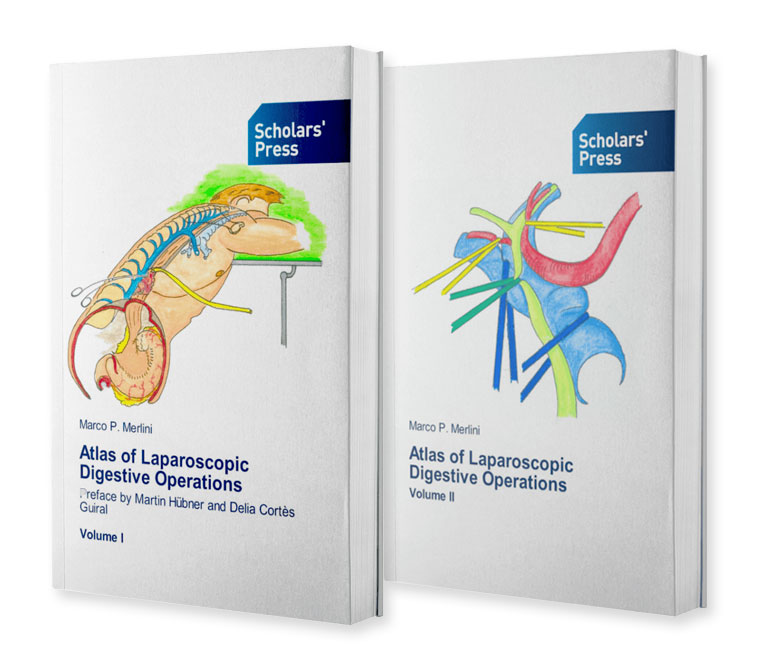
The Atlas of Laparoscopic Digestive Operations describes the operation’s majority from esophagus to anus, of the abdominal wall, liver, pancreas, spleen and adrenal glands. Each operation is described step be step with original handmade watercolor illustrations.
The Atlas is aimed to surgical residents committed in their first years‘ training, eventually before to embark upon a more specialized field in digestive surgery or to choose to keep a wider approach to digestive laparoscopy.
The Atlas has also maybe the goal to be reviewed by the attending who will supervise a junior colleague in a systematic learning of surgery. It is written by a surgeon who worked in University hospitals in Switzerland and abroad and was thus brought face to many surgical tactiques and techniques all around the world.
Thus, this work is the bunch of one surgeon’s experience who knows that, in surgery, there are different opportunities to do right and also different ways to make wrong.